Films of 2025
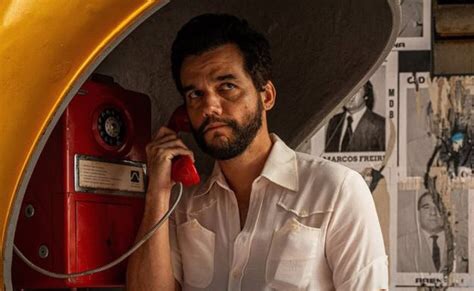
For a long time in 2025, I felt I was waiting for the good films to come along, as the first half of the year was mostly creditable if unspectacular fare. Then Cannes, which had an unusually strong field this year, came along and the quality of films I saw in the cinema skyrocketed. So much that whittling the list down to 50 was difficult – there were quite a few decent films that failed to make even the supplementary cut. The commercial success of many of the year’s finer films was also heartening. Three of my top ten have received Golden Globe nominations and will probably feature at the Oscars too. I have for long been rather gloomy about the future of cinema, something that has only intensified since the rise of streaming platforms and all the nefarious effects they have had on filmmaking, film markets and audiences. But maybe there is cause for optimism after all.

1. The Secret Agent (O Agente Secreto) – Kleber Mendonça Filho (Brazil/France/Germany/Netherlands) 158 mins
As with Faulkner, in Kleber Mendonça Filho’s films, the past is never dead; it is not even past. In the Brazilian’s first three features (and his lyrical documentary Pictures of Ghosts), the past half-century of his country’s history (and more) is a looming menacing presence, with scores settled in ambiguous narrative turns, and violence an ever-constant bass line. Unlike in Walter Salles’s excellent I’m Still Here (whose title could easily apply to any of Mendonça Filho’s films), the menace in The Secret Agent, set, like the previously films, in Mendonça Filho’s native Recife in 1977, is not the Brazilian military dictatorship per se but rather the various hoodlums, spivs and thugs who flourished in its penumbra.
Wagner Moura took the best actor prize at Cannes (which will surely be followed by several more awards) for his portrayal of Armando, a professor of engineering who has lost his wife and job because he had the temerity to stand up to a venal functionary who steals his research and his patent. This being thedark days of the Brazil of the Generals, the stakes are less little man against the system than citizen desperately trying to literally survive. The film, exhilarating as it is in the forensic recreation of the era, its sounds, colours and even the heavy humid fug of the Recife night air, never allows the political and social realities of the time take a back seat. With Golden Globe nominations secured, and probably Oscars to follow, The Secret Agent is Mendonça Filho’s breakout hit, which is fully deserved for what is a superbly entertaining and highly intelligent political thriller.
2. One Battle After Another – Paul Thomas Anderson (USA) 162 mins
The temporal disjuncture between the source material here (Thomas Pynchon’s Vineland, about former 70s political radicals adrift in Reagan’s America) and the contemporary setting makes One Battle After Another rather cartoonish in its tackling of current events (and has annoyed more than a few people), but Anderson’s film isn’t any the worse for that. Leonardo diCaprio is convincingly middle- aged for the first time as Pat Calhoun, a long- dormant weed-addled member of the armed revolutionary group the French 75, who snaps back into action when his teenage daughter Charlene (Chase Infiniti) is abducted by the group’s nemesis Colonel Steven J. Lockjaw (Sean Penn).
Anderson’s customary ambition and flair for elaborate sequences and set-pieces makes the film one of the year’s most entertaining. And, the aforementioned anachronistic setting notwithstanding, the film’s politics are intelligent – even if it went into production long before Trump returned to office, there is a striking resonance to the immigration raid sequences, and few films can have captured the zeitgeist so promptly as Anderson has here in making his baddies ICE-like goons (who, it must be said, are probably still not as repulsive as their real-life counterparts). The panoply of different formats One Battle After Another was available to see in was a gimmick that was strictly for film nerds but it did at least show that in the face of increasing homogenisation of film in the Netflix age, Anderson is flying the flag for cinema as it used to be.
3. Sirāt – Óliver Laxe (Spain/France) 114 mins
Franco-Galician director Óliver Laxe’s fourth feature amalgamates a number of the characteristics of his earlier films – a Moroccan setting, non-professional actors – and starts off with an exhilarating deafening desert rave that is also shot through with eery ominousness. A Spanish father Luís (Sergí Lopez) and his son Esteban arrive on the scene, handing out flyers as they search for Luís’s teenage daughter, who is missing but has been reportedly hanging out in a similar European crusty raver milieu in Morocco. Narrowly escaping arrest by the local military, Luis and a sextet of his new acquaintances head south looking for a putative rave “near Mauritania” and the film soon takes a dark turn.
Sirāt is a frank portrayal of the colonial mindset that reigns even in the counterculture of the European fringes (anyone familiar with the geopolitics of the Maghreb will understand the dangers that might lurk “near Mauritania” but our hedonistic heroes, and Luís, are thoroughly oblivious to it). It is also a drama so gruelling that not everyone might want to give it a go (it contains possibly the most shocking scene I’ve ever witnessed in the cinema, and a few others that run it close). But for all the sense that Laxe is sometimes playing God with his hapless characters, there is a human core to this highly accomplished and technically stunning film.
4. Afternoons of Solitude (Tardes de Soledad) – Albert Serra (Spain/France/Portugal) 125 mins
After his three-film detour into French cinema, Albert Serra returned to Spain for his first documentary, an observational portrait, shorn of voiceover, captions or interviews, of Peruvian torero Andrés Roca Rey, widely considered the greatest contemporary bullfighter. Serra’s film is a two-hour whistle-stop tour of Spain during the corrida season, where little of the country is seen beyond hotel rooms, the back seats of people carriers, and the sun-drenched sand of the arena. The claustrophobia is accentuated by Serra’s proclivity for tight shots, punctuated only occasionally by wide-angle vistas of the bull being hauled away after Roca Rey has departed the scene.
Afternoons of Solitude is more a tone poem than a biography, given we are left at the end with little more knowledge of its main protagonist than we had upon entering. Serra also impassively side-steps any controversy in handling such a contentious subject, probably by dint of his being an insider-outsider – bullfighting has been non-existent in his native Catalonia since 2010 and not even a Spanish Constitutional Court ruling rescinding that ban has revived it, due to lack of public interest. Nobody is going to have their opinion of bullfighting changed by watching this film. It’s hard to imagine anyone who abhors the practice watching it and you suspect aficionados are unlikely to be too impressed either. It is nonetheless, a mesmerising and beautiful work, as is ever the case with this enigmatic director.
5. I Only Rest in the Storm (O Riso e a Faca) – Pedro Pinho (Portugal/Brazil/France/Romania) 211 mins
Pedro Pinho’s second feature, after the brilliantly inventive The Nothing Factory (2017), draws on his own past as a documentarian, and like the previous film, is of a challenging length, though one that rewards the more committed viewer. Sérgio (Sérgio Coragem) is a Portuguese environmental engineer who at the start of the film arrives in Guinea-Bissau to start working for an NGO (he has travelled from Europe by car, which raises the intriguing prospect that he might have crossed paths further north with the protagonists of Sirāt).
Sérgio is charged with writing a report about the environmental impact of a planned forest road. His work, carried out alongside locals and less enlightened Portuguese roughnecks, is opaque but documented with what appears to be meticulous attention. But it’s not all work and no play, as the bisexual Sérgio soon embeds himself in Bissau’s party scene, becoming friends with struggling restaurateur Diára (Cléo Diára, who won Best Actress at Cannes in the Un certain regard sidebar) and transvestite Brazilian migrant Gui (Jonathan Guilherme). Despite the film’s portentous Portuguese title (The Laughter and the Knife), there’s no grand drama or dénouement. I Only Rest in the Storm is, rather, a subdued but enthralling portrayal of expatriate life in Africa that is far more socially engaged than most films of the sort, and one which is far from misty-eyed about NGOs and the people gravitating around them.
6. It Was Just an Accident (Yek tasadof-e sadeh) – Jafar Panahi (Iran/France/Luxembourg) 104 mins
The Palme d’Or for Jafar Panahi’s gripping thriller was probably secondary to the political climate it and its director inhabit. The most notable things about It Was Just an Accident is how brazen Panahi has become in defying the Mullahs; though his films have, since The Circle (1999) skirted subversion, and have earned Panahi many years of imprisonment, film bans and house arrest (which still haven’t prevented him from making films), this film breaks new ground, constituted as it is of multiple transgressions. It’s not unique in contemporary Iranian cinema (Nader Saeivar’s The Witness, written by Panahi, is just another film from this year that tilts at the repressive apparatus in Tehran) but it is certainly the most high-profile example.
The accident of the title sets in train a concerted effort by a group of former political prisoners to mete out justice to a man they know as “Pegleg” whom they suspect of being their torturer from their time in prison. The diverse group form a deliberative jury that is also a Greek chorus (we are consciously aware of how short and undramatic the film might have been had Vahid, the garage-keeper who first discovers “Pegleg”, gone ahead with his plan to bury him alive). The humour typical of a Panahi film enlivens the film (there is a particularly funny scene where security guards whisk out credit card machines to expedite a bribe) but Panahi also subjects it to the same pressures of the real world that imperil the freedom of those involved in the production itself. For once, the film’s Cannes’s success was acknowledged by Iranian media but it has not necessarily been a refuge for Panahi, who, while travelling in the United States earlier this month was sentenced to a year in prison in absentia. As ever with contemporary Iranian films and the way they negotiate and shape the society they spring from, watch this space.
7. Sex / Dreams (Sex Love) (Drømmer)/ Love (Kjærlighet) – Dag Johan Haugerud (Norway) 118 mins/110 mins/120 mins
Joachim Trier’s Sentimental Value got most the international attention for Norwegian cinema this year. Decent as that film was, it was a fairly conventional art house drama of the sort that has already been made by multiple members of the joint Houses of Bergman and Ullman. Dag Johan Haugerud’s “Oslo Trilogy”, a trio of coterminous, and fleetingly overlapping tales of working people and their desires, is a more original and more interesting work from the Norwegian capital.
The titles make the films seem like titillating Scandinavian fare of an earlier era, but the sex is verbal for the most part, a Nordic Ma Nuit chez Maud-times three. As well as being a novelist and a filmmaker, Haugerud is also a librarian; like a previous literary librarian, Philip Larkin, he finds sex a fascinating subject, but without the lurches into misanthropy to which it led Larkin.
In Sex, a married chimney sweep confesses to his colleague and his wife that he took up a male client on a proposition and had sex with him, “which was surprisingly pleasant”. (I was also surprised to learn that chimney sweeps are not only still a thing in Norway but they appear to enjoy a standard of living most people in other countries would envy.) In Dreams – winner of the Golden Bear at Berlin – a teenage girl briefly becomes a literary sensation for her putatively mature memoir of her unrealised same-sex infatuation with her French teacher, much to the irritation of her mother, a celebrated author, whose editor now only has eyes for the daughter’s manuscript. In the final film Love (though they can be watched in any order), a middle-aged female doctor is inspired by her free-loving gay male colleague to experiment with hook-ups on Tinder. There are a few overarching themes that bind the three tales together, most notably Arnstein Arneberg and Magnus Poulsson’s Oslo City Hall building.
8. Resurrection (Kuángyě Shídài) – Bi Gan (China/France) 156 mins
Bi Gan’s third film is a splendid-looking enigma in the manner of David Lynch or Leos Carax that will puzzle most people on first viewing but will generate multiple rewatching for many others. Resurrection (its English title, with its Christian resonance, is bafflingly ill-fitting) straddles the divide between science fiction and fantasy. In the future, humans no longer dream, having given up the ability in exchange for longer life.
Miss Shu (Shu Qi) finds a so-called “Deliriant” (Jackson Yee), other-worldly creatures who continue to dream, and, in a silent opening sequence reminiscent of German Expressionism, installs a film camera in his brain to film his dreams. We then see six disparate dreams, each based on the six senses in Buddhist though, and all of which feature Yee, the last of which is a technically brilliant 30-minute single take, which after three films, has become something of a leitmotif of Bi’s. Narratively, there is not an awful lot of meat on the bone, but that is more than made up for by the beauty and strangeness of the work. You have to admire the doggedness of Bi, an ethnic Miao from the provincial city of Kaili, in smuggling art films into the multiplex. Public reaction in China was split, with many expecting something very different from a film starring two of Chinese cinema’s biggest stars – Shu Qi and Jackson Yee. But, then again, Bi was also unapologetic about the bait and switch of selling his second feature Long Day’s Journey into Night as a Valentine’s Day film. Long may his effrontery continue.
9. Kontinental ’25 – Radu Jude (Romania/Brazil/ Switzerland/UK/Luxembourg) 109 mins
With three films released in 2025, Radu Jude confirmed his status as contemporary European cinema’s most prolific practitioner. Jude turns out absorbing, intellectually provocative films almost as deftly and effortlessly as Fassbinder did in his day. Kontinental ‘25, filmed in ten days on an iPhone, is the best of this year’s haul, and is a reinterpretation of Rossellini’s Europa ‘51, set in the Transylvanian capital Cluj-Napoca, where Jude also filmed an experimental film essay on the Dracula myth this year.
The film begins with bailiff Orsolya (Eszter Tompa) plunged into a crisis of conscious when a man she is evicting from a building that about to be demolished to make way for a boutique hotel commits suicide. She faces a wave of nationalist harassment online that targets her Hungarian ethnicity, and the fact the dead man was once a minor athlete who represented Romania. She decides to cry off a skiing trip with her family and ends up going out on a bender with a former student of hers, a garrulous philosophically inclined bicycle courier (Adonis Tanța). Through a succession of encounters, with colleagues, her Viktor Orbán-voting mother (who snipes that the Romanians have ruined Transylvania in the century since it was handed over to them), and her priest, Eszter seeks self-exculpation for the death of her evictee. Kontinental ‘25 is a wry skewering of liberal middle-class guilt without ever descending into sourness or cynicism, reflective of Jude’s superlative oeuvre and also of contemporary Romanian cinema, which is probably the most socially astute of any European country right now.
10. Black Dog (Gou Zhen) – Guan Hu (China) 110 mins
Guan Hu’s canine drama delineates a quixotic (and possibly apocryphal) episode of Beijing’s build-up to the Beijing Olympics in 2008. Lang (Eddie Peng), a former stunt-motorcyclist released from prison after serving time for manslaughter, returns to his home town in the Gobi Desert and signs up for what looks to be the only work going: eradicating the town’s massive population of stray dogs. Lang soon experiences one of the pitfalls of being around stray dogs: they latch onto you something terrible. After trying to discourage Xin, the dog of the title, from following him, he gives in, and ends up saving the dog, and later, a puppy the dog fathers.
The idea that such a backwater desert town might have anything to do with China’s hosting of the Olympics is probably part of the point of the film. Regardless of the verisimilitude, Black Dog is a visually arresting thriller and the presence of Jia Zhangke as the chief dog-catcher Uncle Yao, (Jia is himself from those parts) makes one yearn for the days before his own films took a detour into overly staid trans-generational state-of-the-nation dramas. Taiwanese actor Eddie Peng supposedly developed such a bond with Xin that he adopted the dog, something you really hope wasn’t a piece of PR slipped into the press package.
Also worth a look
✿ A Complete Unknown – James Mangold (USA) 141 mins
✿ A Poet (Un poeta) – Simón Mesa Soto (Colombia/Germany/Sweden) 120 mins
✿ A Real Pain – Jesse Eisenberg (Poland/USA) 90 mins
✿ A Traveller’s Needs (Yeohaengjaui piryo) – Hong Sang-soo (South Korea) 90 mins
✿ All Shall Be Well (Cung Gam Ji Hau) – Ray Yeung (Hong Kong) 93 mins
✿ Babygirl – Halina Reijn (USA) 115 mins
✿ Below the Clouds (Sotto le nuvole) – Gianfranco Rosi (Italy) 115 mins
✿ Black Bag – Steven Soderbergh (USA) 94 mins
✿ Blue Sun Palace – Constance Tsang (USA) 116 mins
✿ Case 137 (Dossier 137) – Dominik Moll (France) 115 mins
✿ Château Rouge – Hélène Milano (France) 107 mins
✿ Dracula – Radu Jude (Romania/Austria/Luxembourg/Brazil) 170 mins
✿ Eddington – Ari Aster (USA) 149 mins
✿ Eight Postcards from Utopia (Opt ilustrate din lumea ideală) – Radu Jude, Christian Ferencz-Flatz (Romania) 71 mins
✿ Hard Truths – Mike Leigh (UK/Spain) 97 mins
✿ Holy Cow (Vingt dieux) – Louise Courvoisier (France) 90 mins
✿ I’m Still Here (Ainda Estou Aqui) – Walter Salles (Brazil/France) 138 mins
✿ Je n’avais que le néant – “Shoah” par Lanzmann – Guillaume Ribot (France) 94 mins
✿ Late Shift (Heldin) – Petra Volpe (Switzerland/Germany) 91 mins
✿ Le Cinquième Plan de La Jetée – Dominique Cabrera (France) 97 mins
✿ Left-Handed Girl (Zuo Pie Zi Nu Hai) – Shih-Ching Tsou (Taiwan/USA/UK/France) 109 mins
✿ Lumière! The Adventure Continues (Lumière l’aventure continue) – Thierry Frémaux (France) 104 mins
✿ Maria – Pablo Larraín (Italy/Germany/Chile/USA) 124 mins
✿ Mickey 17 – Bong Joon Ho (USA/South Korea) 137 mins
✿ Miroirs N° 3 – Christian Petzold (Germany) 86 mins
✿ Mountainhead – Jesse Armstrong (USA) 109 mins
✿ Nouvelle Vague – Richard Linklater (France/USA) 106 mins
✿ Seven Days (Haft rooz) – Ali Samadi Ahadi (Iran/Germany) 153 mins
✿ Sudan, Remember Us (Soudan souviens-toi) – Hind Meddeb (France/Tunisia/Qatar) 78 mins
✿ The Fire Within: A Requiem for Katia and Maurice Krafft – Werner Herzog (USA/France/Switzerland) 81 mins
✿ The Great Arch (L’Inconnu de la Grande Arche) – Stéphane Demoustier (France) 104 mins
✿ The Little Sister (La petite dernière) – Hafsia Herzi (France/Germany) 106 mins
✿ The New Year That Never Came (Anul Nou care n-a fost) – Bogdan Mureșanu (Romania) 134 mins
✿ The Phoenician Scheme – Wes Anderson (USA/Germany) 101 mins
✿ The Room Next Door – Pedro Almodóvar (Spain) 107 mins
✿ The Shrouds – David Cronenberg (France/Canada) 120 mins
✿ The Voice of Hind Rajab (Ṣawt Hind Rajab) – Kaouther Ben Hania (Tunisia/France) 89 mins
✿ The Witness – Nader Saeivar (Austria/Germany) 100 mins
✿ Two Prosecutors (Zwei Staatsanwälte) – Sergei Loznitsa (France/Germany/Romania/Latvia/Netherlands/Lithuania) 117 mins
✿ Universal Language – Matthew Rankin (Canada) 89 mins
✿ Virmiglio – Mauro Delpero (Italy/France/Belgium) 119 mins
✿ Youth (Hard Times) (Qīngchūn: Ku) / Youth (Homecoming)(Qīngchūn: Gui)– Wang Bing(China/France/Luxembourg/Netherlands) 227 mins/152 mins
 OLIVER FARRY